
Locations drift more than faces do
A street that moves between shots breaks the geography of a scene. What holds it together is a four-item list.

Characters get all the attention in the consistency conversation, and locations quietly cause more damage. A face that drifts is embarrassing. A street that drifts breaks the geography of a scene, and once an audience cannot tell where anyone is standing, a sequence stops working as a sequence.
The failure survives review because each shot looks fine alone. It is only in the cut that the door has moved to the other side of the street. This is a working method for stopping that, built on one location we generated from scratch.
Write the inventory before you generate anything
A prompt that says a charming European side street will produce a charming European side street, differently, every time. What holds a place together is a short list of specific objects and which side they are on. Sketching it as a plan first takes two minutes and forces the decisions that the prose would leave vague.
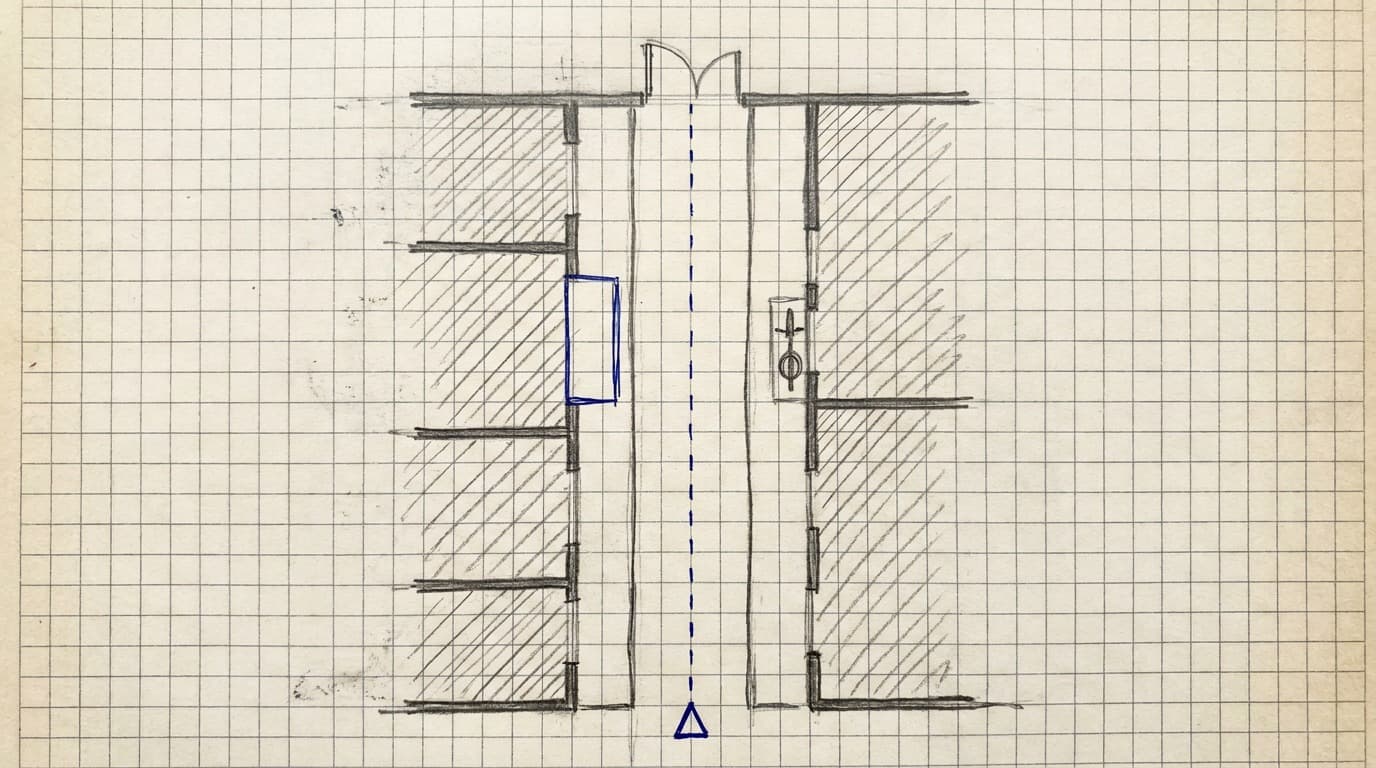
Ours was four items long: a green grocer awning on the left, a red bicycle chained to a lamp post on the right, a blue door with a brass number plate at the far end, laundry strung between two upper windows. Short enough that nobody minds retyping it into every shot, which is the actual requirement.
Generate the establishing wide first
The wide is the reference every other shot will be judged against, so make it first and make it contain everything on the list. If an object is not visible here, it does not really exist yet.

Test the reverse immediately
This is the most diagnostic thing you can do, and the step most often skipped. Turn around. The reverse forces the model to have an opinion about which side things are on, and it is where you find out whether you have a street or just two pictures of a street.
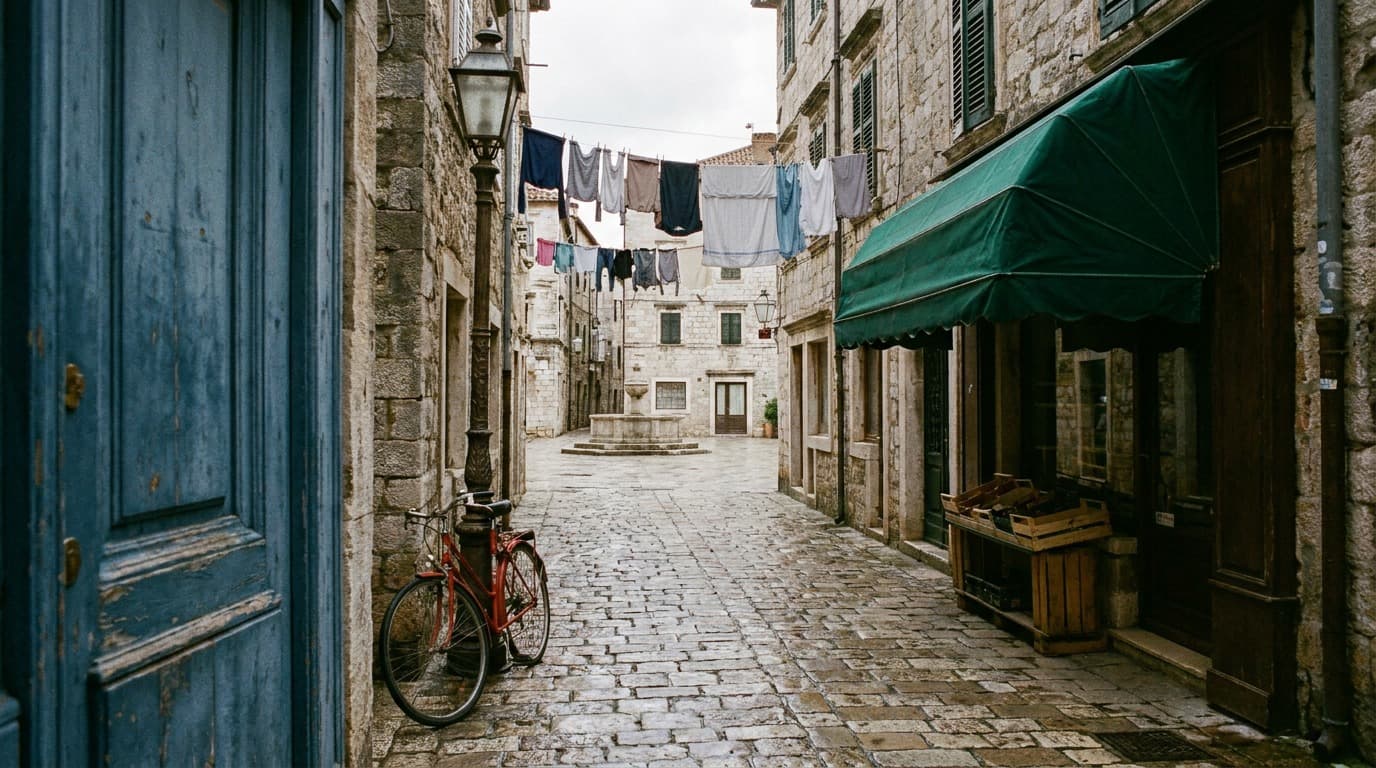

The frame on the right is what a vague description gets you. Nothing in it looks wrong. Cut it against the wide and the audience is lost, because the awning, the vehicle, the door colour and the street width have all changed.
Fill in the coverage while the setup is live
Once the wide and the reverse agree, generate the rest immediately. Mediums, inserts, anything you might plausibly need. Coverage produced inside a live setup matches; coverage produced three days later from a half-remembered description does not.


Change one axis at a time
With the inventory holding, it holds through weather and hour too. Here is the same street at night in rain: same four objects, entirely different lighting condition, and the awning shuttered because shops shut. That small consequence is worth stating rather than hoping for.

What does not survive is changing the inventory and the light in the same generation. One axis per attempt and you always know which change caused what.
Move the camera through it
A location is only really proven when the camera travels through it, because a move exposes any geometry the stills were hiding. A straight dolly down the street is the cheapest stress test there is.
Which objects actually earn their place
Not every item works equally hard. Useful ones are asymmetric, meaning they tell you which way the camera faces. A red bicycle on the right is a continuity object. Cobblestones are not, because they look the same from everywhere and confirm nothing.
Two or three asymmetric objects spread across the space is enough for an audience to hold a mental map. More than that and the location starts to feel dressed rather than lived in. One slot should go to a scale reference: a door, a bench, a parked car, something whose real size everyone knows. Without one, the model reinterprets how wide the street is between shots.
Interiors are harder
A street has a spine. It runs one way and the camera is either looking up it or down it. A room has no spine and four walls a model is happy to rearrange, so the window appears on whichever wall the composition prefers.
Describe interiors as relationships instead of contents. The window faces the door. The desk sits under the window with its back to the fireplace. Relationships encode the plan, and a plan survives a change of angle in a way that a list never does.
Then keep the description in the project, not in your head. Six weeks later a pickup shot needs it, and reconstructing it from memory produces a street that is almost right, which is worse than one that is obviously wrong.